

Can you use sewing thread for machine embroidery?
The short answer is: yes — but the result depends on the thread type and what you expect from your embroidery.
To find out what really happens, I stitched a simple test using three different thread types:
- embroidery thread
- regular sewing thread
- overlock (serger) thread
Each thread was used to stitch one letter, so the results are directly comparable.
What happens when you use sewing thread for machine embroidery
At first glance, sewing thread seems like a logical alternative.
You probably already have it at home, especially if you sew regularly.
And technically, it works.
The machine stitches without major issues, and the thread does not necessarily break.
But the difference becomes visible when you look closely at the final result.
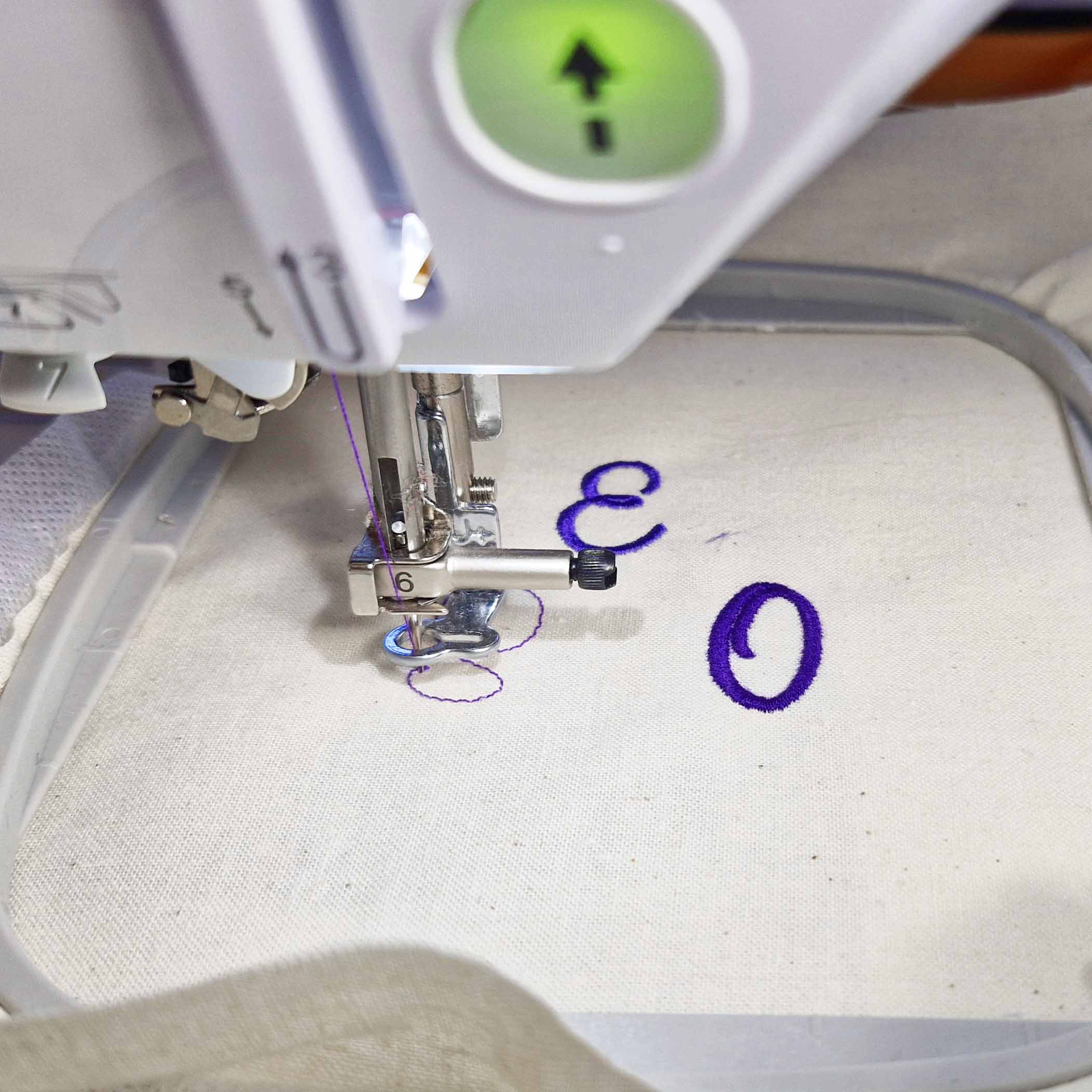
In this test, I stitched three letters using different threads.
The machine handled all of them, but the visual outcome varies quite a bit.
Embroidery thread vs sewing thread vs overlock thread
To make the comparison clearer, I placed the stitched result next to the actual threads.

Each thread behaves differently in machine embroidery.
Embroidery thread
Designed specifically for embroidery.
It has a smooth surface and a slight sheen, which creates a clean and professional look.
Sewing thread
Works surprisingly well.
The stitches are clean, but the surface looks more matte and slightly less defined.
Overlock thread
Also works, especially for testing or experimenting.
However, it is thinner and softer, which makes the result look less crisp.
The real difference: how the final embroidery looks
The biggest difference is not whether it works — but how it looks.

Looking at the stitched letters:
- E (embroidery thread) → smooth, shiny, clean
- S (sewing thread) → slightly matte, still solid
- O (overlock thread) → softer, less defined
Once you see the embroidery thread result, it is hard to go back.
The difference in finish is immediately noticeable.
When does it make sense to use sewing or overlock thread?
Even though embroidery thread gives the best result, alternatives can still be useful.
You can use sewing or overlock thread if:
- you are just testing a design
- you want to save embroidery thread for final projects
- you need a very specific color you only have as sewing thread
However, for visible or finished pieces, embroidery thread is clearly the better choice.
Final thoughts: is it worth using alternatives?
Yes, you can use sewing thread for machine embroidery.
And yes, you can even use overlock thread.
But if you care about the final look, embroidery thread is on another level.
The shine, the smoothness, and the overall finish make a clear difference.
Once you have seen it side by side, the choice becomes obvious.
FAQ – Sewing thread vs embroidery thread
Can you use sewing thread for machine embroidery?
Yes, you can.
Most sewing threads work in embroidery machines, but the result is usually more matte and less refined than with embroidery thread.
Is embroidery thread better than sewing thread?
Yes.
Embroidery thread is specifically designed for decorative stitching and produces a smoother and shinier result.
Can you use overlock thread for embroidery?
Yes, but with limitations.
Overlock thread is thinner and softer, which can lead to less defined embroidery results.
Why does embroidery thread look better?
Embroidery thread has a smoother surface and a slight sheen.
This reflects light differently and creates a cleaner, more professional finish.


Leave A Comment