
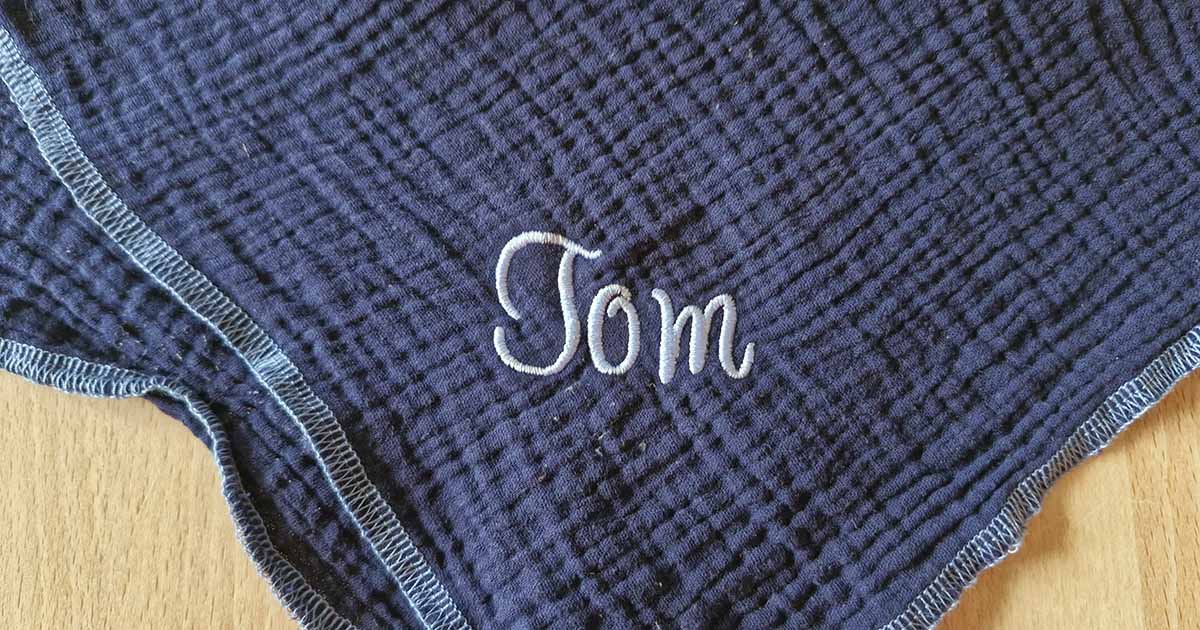
Muslin feels soft, airy and light – yet many embroiderers hesitate when working with machine embroidery on muslin.
Questions often come up immediately:
Will the fabric pucker?
Will stitches sink into the surface?
Will the embroidery distort the fabric?
With the right preparation, the answer is clear: machine embroidery on muslin works beautifully.
What makes muslin challenging for embroidery
Muslin is a lightweight fabric with a loose weave and very little natural stability.
As embroidery stitches form, they create constant tension in the fabric.
Compared to quilting cotton or poplin, muslin reacts far more sensitively to that tension.
Without proper preparation, puckering appears quickly – especially when stitching names or lettering.
What is puckering – and why does it happen?
Puckering occurs when fabric cannot absorb the tension created by embroidery stitches.
Lightweight fabrics like muslin lack the internal structure needed to balance stitch pull.
Instead of blaming the machine, focus on preparation.
Note:
When embroidering on muslin, stabilizer quality and firmness matter more than color.

Preparing muslin for machine embroidery
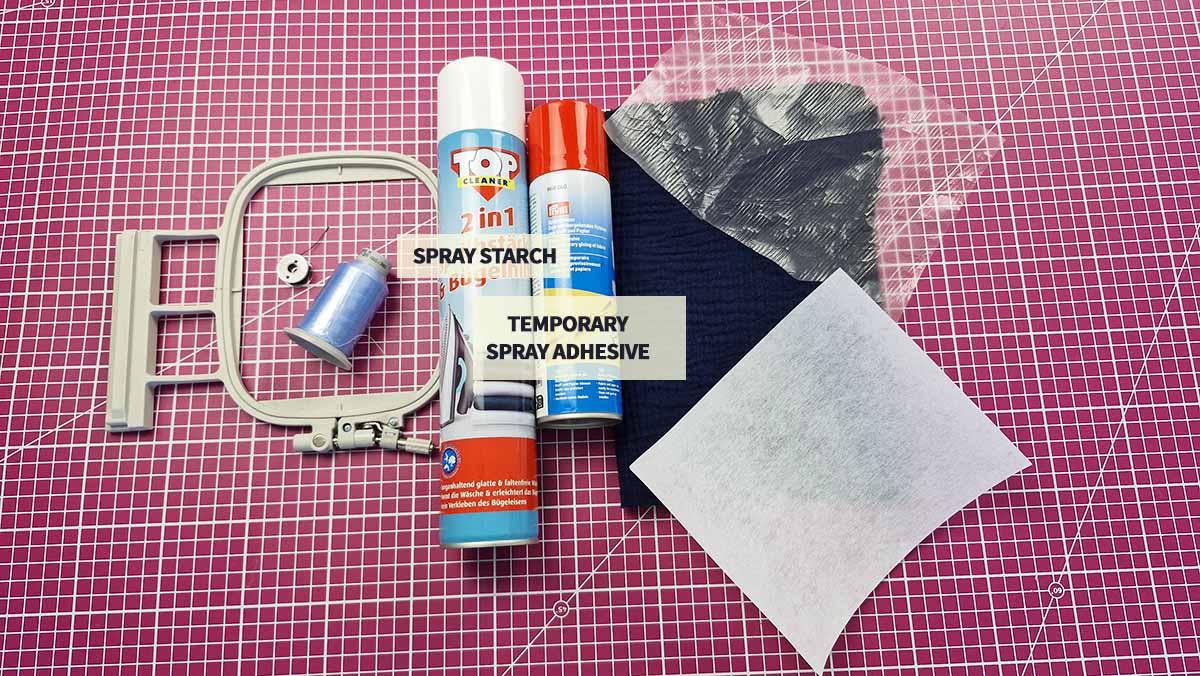
Start by hooping the embroidery stabilizer instead of the fabric.
A light layer of temporary spray adhesive creates a secure surface.

Rather than stretching muslin inside the hoop, gently attach it to the stabilizer.
This approach prevents distortion and reduces fabric stress before stitching begins.

Why embroidery film improves results
Place a water-soluble embroidery film directly on top of the muslin.
The film supports the stitches during embroidery and keeps them from sinking into the fabric.
Lettering benefits the most from this step.
Clean edges and well-defined stitches remain visible throughout the entire process.

Font choice for muslin embroidery
Design selection plays just as important a role as stabilization.
Narrow serif fonts work extremely well on muslin when stitch density remains low.
Outline fonts offer another excellent option for lightweight fabrics.
Bolder block fonts can still work when combined with very light fills.
Open structures such as meander fill reduce stitch tension.
Avoid dense satin fills, as muslin cannot support them reliably.
After stitching
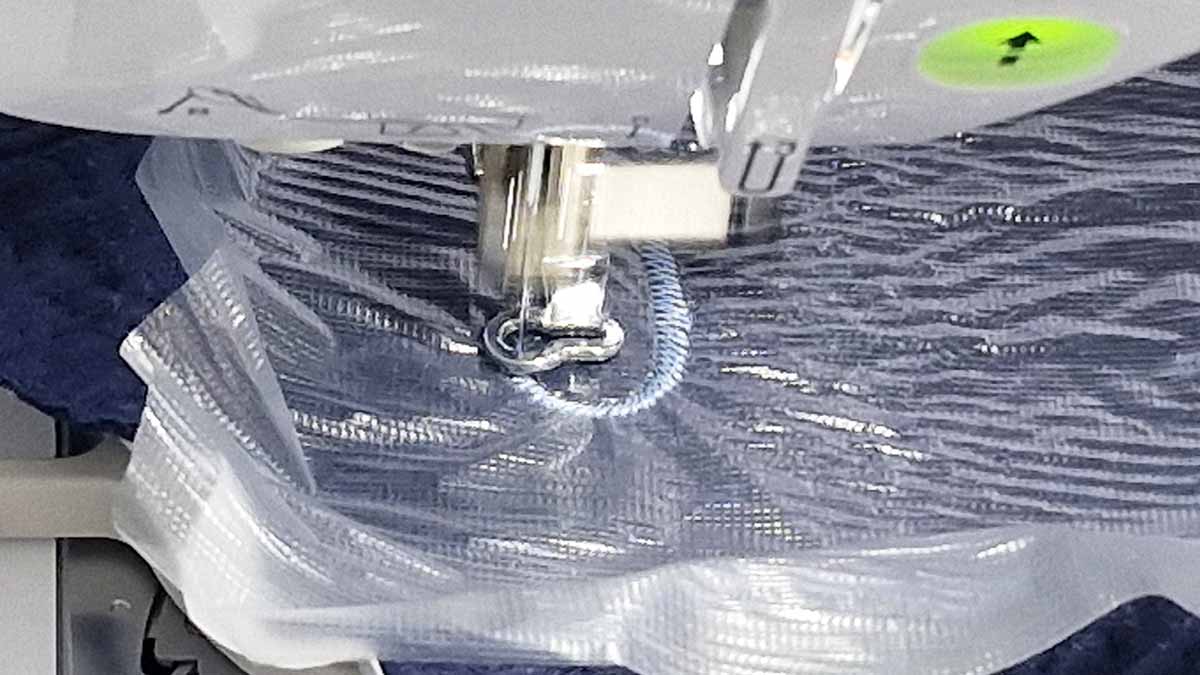
After embroidery finishes, the embroidery film remains visible on the surface.
This stage is completely normal and protects stitch quality during stitching.

Back of the embroidery
The stabilizer still supports the stitches fully on the back.
This support keeps the embroidery stable and prevents long-term distortion.

After trimming or removing the stabilizer, the fabric stays soft, flexible and clean.

Final result after washing
Washing dissolves all remaining film residue.
The muslin relaxes naturally, while the embroidery stays smooth and flat.
Before washing, finishing the edges with an overlock stitch helps reduce lint and prevents excessive fraying.

FAQ – Machine embroidery on muslin
Can you machine embroider on muslin?
Yes. With proper preparation, machine embroidery on muslin works reliably.
Stabilization and design choice determine the final result.
Why does muslin pucker during embroidery?
Muslin puckers when the fabric cannot support stitch tension.
In most cases, insufficient stabilization causes the issue – not the embroidery machine.
What stabilizer works best for muslin?
A firm, high-quality stabilizer delivers the best results.
Color matters less than stability and clean removal after stitching.
Do you need embroidery film on muslin?
In most cases, yes.
Embroidery film improves stitch definition and prevents stitches from sinking into the fabric.
Which fonts work best on muslin?
Fonts with low stitch density perform best.
Narrow serif fonts, outline fonts and light fill structures such as meander fill work particularly well.


Leave A Comment